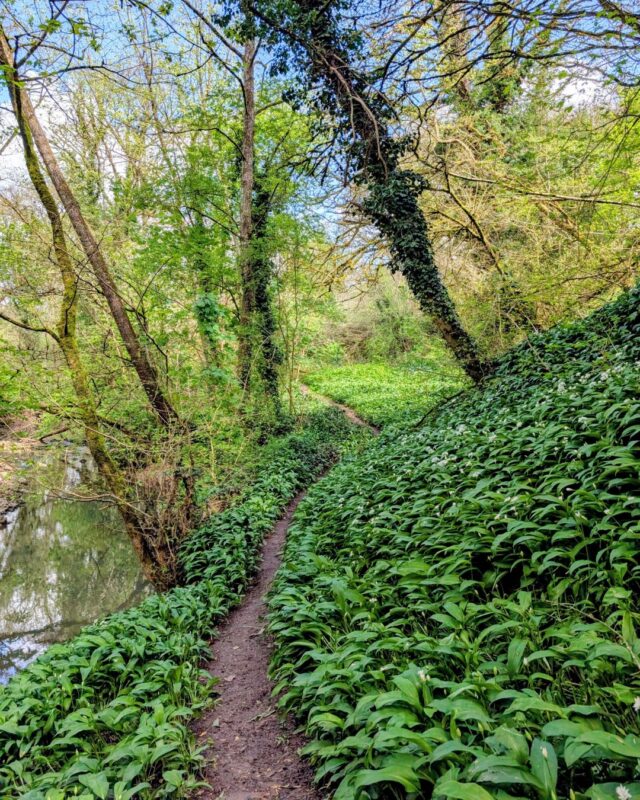
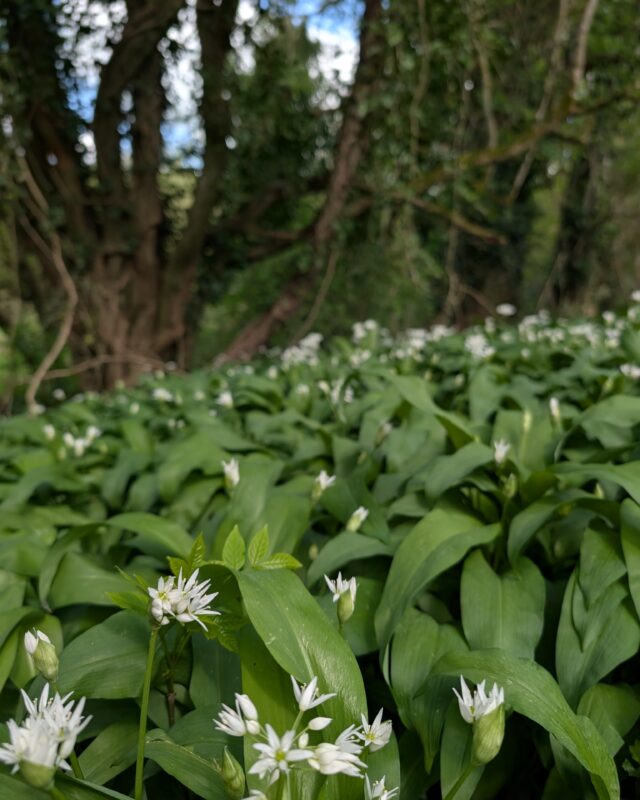
We’ve been treated to some wonderful bluebell displays these past weeks, and while the delicate indigo blooms may be starting to go over, the spring countryside is still looking glorious here in the South West. Last weekend, Foot Trails Storyteller Emma decided to make the most of wild garlic season and go foraging for some of the edible plant’s tasty leaves.
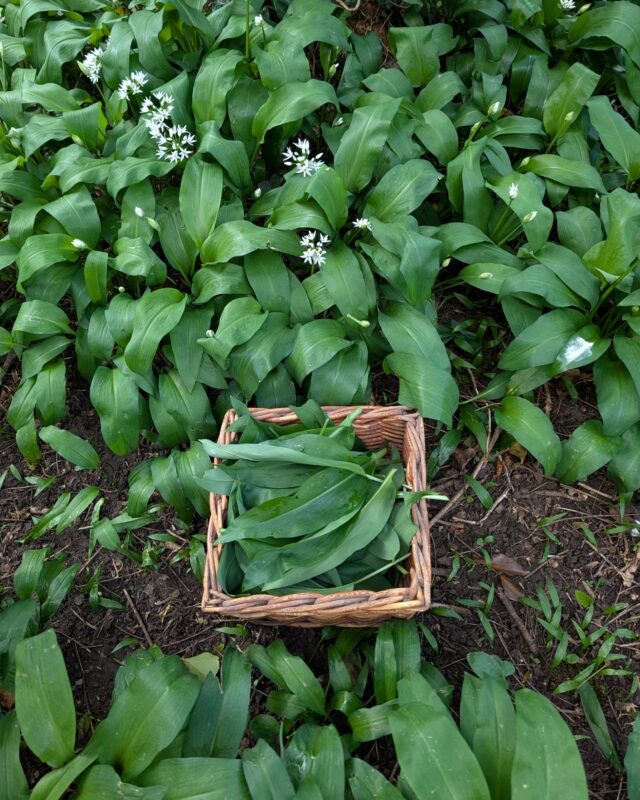
“Prized for its garlicky-tasting leaves, wild garlic is a favourite amongst foragers. With this in mind, I set off to my local woods (scissors in hand) to forage some leaves to make wild garlic pesto.
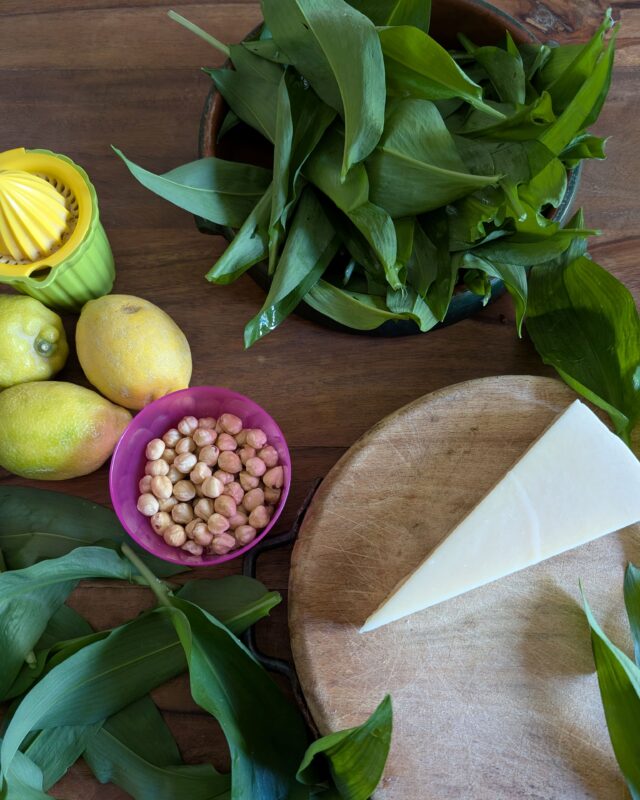
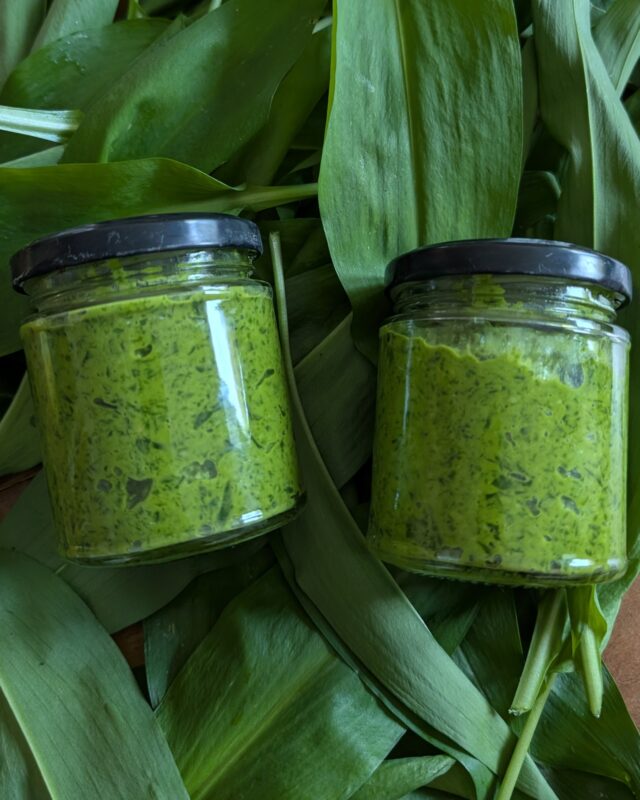
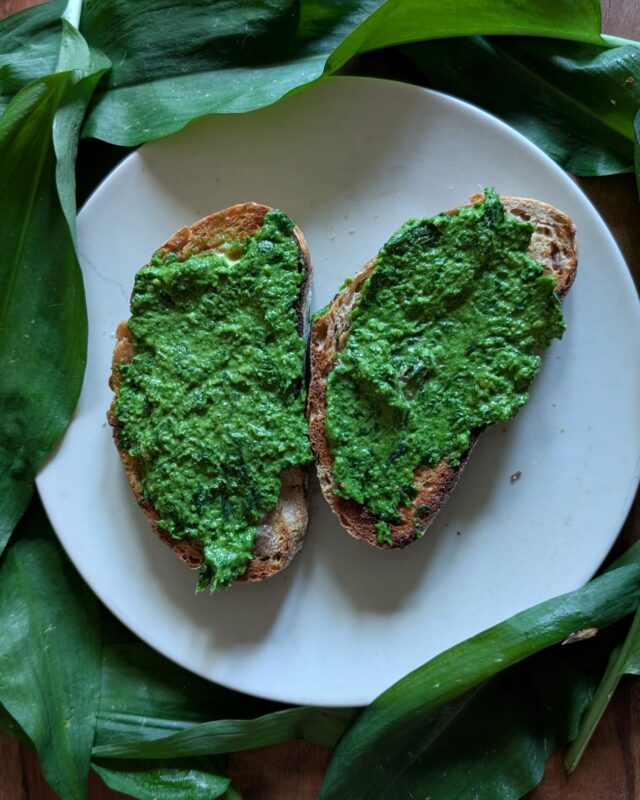
At home, having thoroughly washed the leaves, I used the following recipe from the BBC Good Food website to create a vibrant green pesto that tasted delicious. It was easy to make and I now have two small jars that should keep me well provisioned for the next week or two :)”
Ingredients 100g/3½oz wild garlic 40g/1½oz blanched hazelnuts, or cobnuts 6 tbsp cold-pressed rapeseed oil, plus extra for storing 3 tbsp lemon juice (approx. 1½ small lemons) 2 tbsp freshly grated pecorino cheese sea salt, to taste
Method Blend the wild garlic, hazelnuts, rapeseed oil and lemon juice in a high-powered blender or food processor, until you reach a rough, pesto-like consistency.
Scrape down the sides of the processor with a spatula and add the pecorino and a good pinch of salt. Blend again, taste, and add more salt if needed.
Transfer to a sterilised jar and cover the top of the pesto with a thin layer of oil to help keep it fresh. Store in the fridge for up to 2 weeks.
If you’d like to explore tucked-away bluebell and wild garlic woods in South West England in spring 2027, we’re already taking bookings. Simply visit our trips page or send us an email at enquire@foottrails.co.uk.